
How to Ask for a Recipe (and Actually Get What You Want)
Great recipes start with great prompts. Learn how to describe what you want — ingredients, mood, constraints, and context — so Magical Recipes can give you results that actually fit your kitchen and your taste.
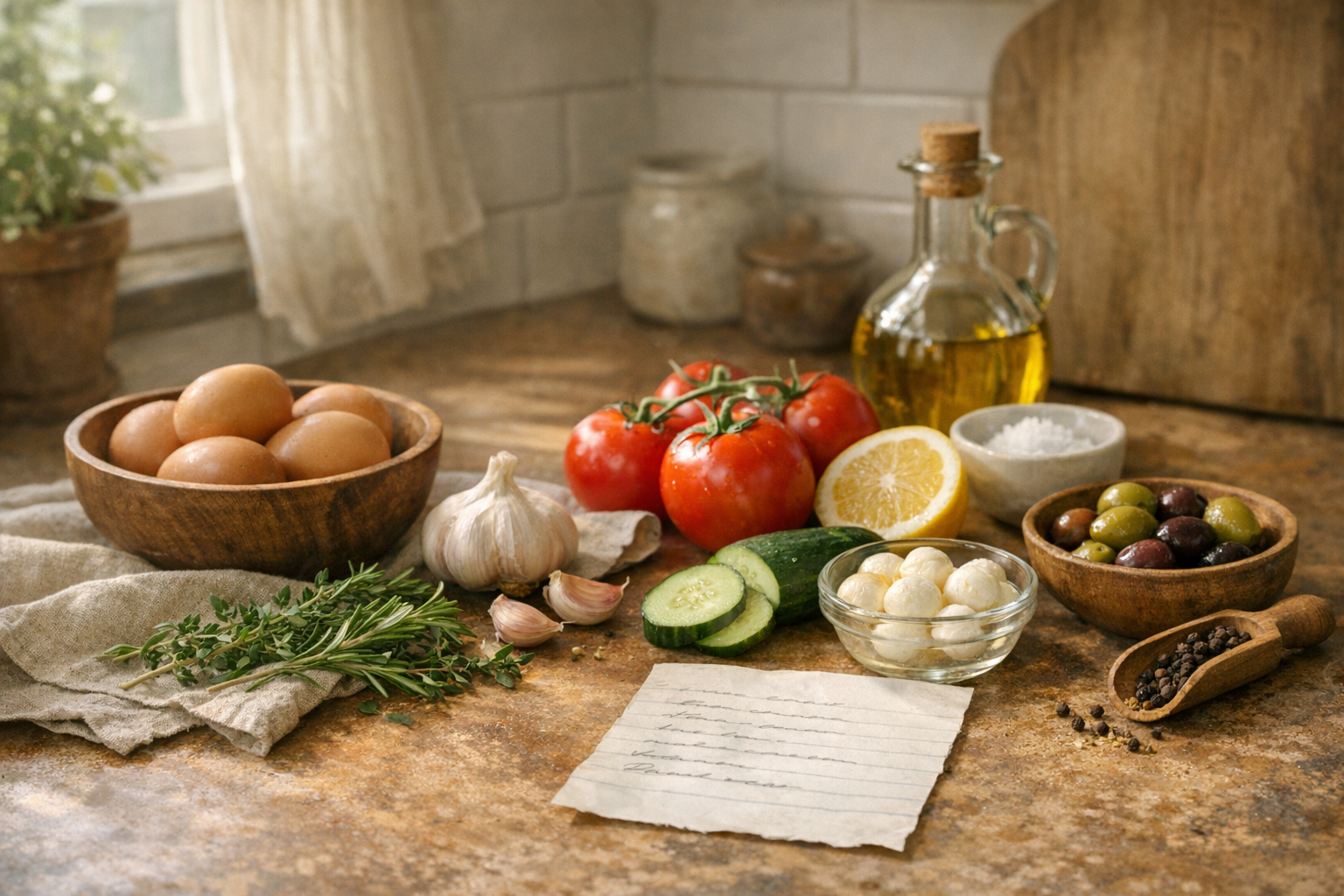
Magical Recipes works best when you treat it less like a search box — and more like a conversation with a really good cook.
The more context you give, the better the recipe you’ll get.
This guide will show you how to write prompts that lead to useful, realistic, and delicious recipes — not generic ones.
1. Start with what you have
If you already know what’s in your fridge or pantry, say it.
Instead of:
“Give me a dinner recipe”
Try:
“I have chicken thighs, rice, frozen peas, garlic, and lemon”
This immediately narrows things down and avoids recipes that require extra shopping.
You don’t need to list everything. Just the main ingredients you want to use or get rid of.
2. Say what you’re craving (or avoiding)
Mood matters in cooking.
Tell us how you want the food to feel:
- Comfort food
- Fresh and light
- Cozy and filling
- Quick and simple
- Something a bit special
Example:
“I want something cozy and filling, but not heavy”
Or:
“I want something fresh, no cream or cheese”
This helps shape flavors, techniques, and portion sizes.
3. Add real-life constraints
Great recipes fit into real lives — not just ideal kitchens.
Mention things like:
- Time limits
- Skill level
- One-pan / minimal dishes
- Kid-friendly
- Leftovers for tomorrow
Example:
“Dinner for two adults and a toddler, ready in under 30 minutes”
Or:
“Something that reheats well for lunch tomorrow”
These details dramatically improve the result.
4. Don’t be afraid to be specific
Specific is good. Very good.
Instead of:
“A pasta recipe”
Try:
“A tomato-based pasta, no cream, with a bit of heat”
Or:
“A vegetarian dinner that still feels filling”
You’re not “overprompting”. You’re cooking with intention.
5. You can ask for adjustments
The first recipe doesn’t have to be perfect.
You can always follow up with things like:
- “Make it simpler”
- “Can I swap chicken for lentils?”
- “Less spicy”
- “More protein”
- “Can this be done in the oven instead?”
Think of it as iterating — like adjusting a recipe while cooking.
6. Bad prompts → vague recipes (and that’s on purpose)
If you give very little input, you’ll get something very general back.
That’s not a bug — it’s a signal.
The quality of the recipe usually matches the clarity of the prompt.
A simple prompt template
If you’re ever unsure, this works surprisingly well:
“I have [ingredients].
I want something [mood or style].
It should be [constraints].”
Example:
“I have salmon, potatoes, and yogurt.
I want something fresh but comforting.
It should be oven-based and kid-friendly.”
That’s it. That’s the sweet spot.
Final thought
Magical Recipes isn’t here to replace your intuition — it’s here to support it.
The better you explain what you want, the closer the recipe will feel like something you would have come up with yourself.
Now go cook something great.
Filed under: